Customer
Developers and automation builders whose apps need invoices, reports or other generated PDFs.
Browser storage is unavailable. Keep this page open and export your collection before leaving.
 PDFMonkey
PDF generation from reusable templates and JSON data.


Developers and automation builders whose apps need invoices, reports or other generated PDFs.
An application needs a finished PDF, but maintaining the rendering code and document layouts becomes a separate engineering task.
PDFMonkey began with an HTML/CSS code editor and later added a visual editor. Its December 2019 announcement introduced reusable invoice, bill and contract templates in response to customer requests. In February 2026 it replaced the legacy visual editor for new templates with a purpose-built drag-and-drop Builder. That 2026 post identifies Simon Courtois as CTO and co-founder; the 2019 post describes Vincent Trusgnach as CEO and a former software architect.
PDFMonkey — A Giant Leap, 9 February 2026PDFMonkey — Master Templates, 9 December 2019Oversees the platform’s development and evolution; his official bio describes a focus on development, technology and design.
PDFMonkey — A Giant Leap, 9 February 2026PDFMonkey positions itself as a way to remove repetitive PDF-generation development work: teams build templates, supply data through an API and receive generated documents.
Brand sourceNo primary company or investor announcement verifying funding rounds or bootstrapped status was found. Funding remains unknown; third-party funding and revenue estimates are not included.
Developers can use HTML, CSS and Liquid templates; operations teams can use a visual Builder with variables, conditions and loops.
PDFMonkey — A Giant Leap, 9 February 2026PDFMonkey — Dashboard UI tourThe editor previews a real PDF using the same rendering engine as the final document, so layout can be inspected before publication.
PDFMonkey — Dashboard UI tourAn open-source CLI lets developers work on templates locally and refresh a browser preview when files change.
PDFMonkey — Local CLI announcement, 27 January 2025Sourced product choices; not a claim of uniqueness or a proven competitive moat.
A template is built and previewed in the dashboard.
An API request supplies changing values as JSON.
The generated PDF is retrieved by the application or automation.
Its core flow is template creation, an API call with JSON data, and a generated PDF.
PDFMonkey PDF generation APICode templates use HTML, CSS and Liquid for layout and dynamic content.
PDFMonkey code templatesThe free plan retains documents for one day and does not load external images, fonts, CSS or JavaScript.
PDFMonkey plans and pricingPDF rendering is sold as application infrastructure through an API. Usage and retention tiers accommodate occasional generation and production workloads.
Fonts, page breaks and external assets create rendering edge cases that require reliable output and clear troubleshooting.
Company, founder and investor sources. Product claims are not independent testing; funding announcements do not establish revenue or profitability.
Call the API with JSON data
Build and customize PDF templates with HTML, CSS, and Liquid.
20 documents per month
PDFMonkey started with a Code editor. HTML, CSS, full control.
Vincent is the CEO of PDFMonkey, a former software architect
The preview pane renders a real PDF using the same engine that produces your final documents
Every time you save a file, the preview will refresh!
Founding year self-reported on the company LinkedIn profile, linked from the official homepage. No exact launch or incorporation date is asserted.
Editorial assessment
PDFMonkey’s 2019 product announcement describes existing invoice and contract users and features requested by them. Together with the currently reviewed product documentation, this supports customer use; current revenue and scale remain unknown.
PDFMonkey: user-requested templates, December 2019 Checked 2026-09-23
Maturity is an evidence-based assessment, not a success rating. It may understate the current stage where evidence is limited. Coverage records documented areas, not a complete or independently audited company history.

Personalized PDFs generated from templates and connected data.
Same product type · Document generation
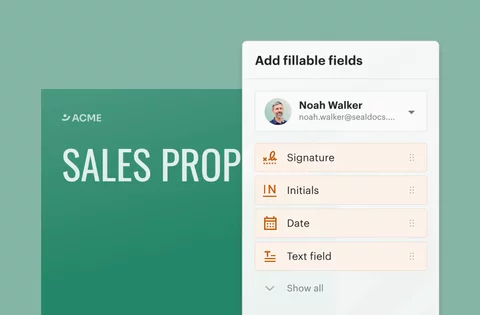
Proposals and agreements with approvals, signatures and payment collection.
Same product type · Document generation
 Plumsail Documents
Business documents generated from existing templates and app data.
Same product type · Document generation